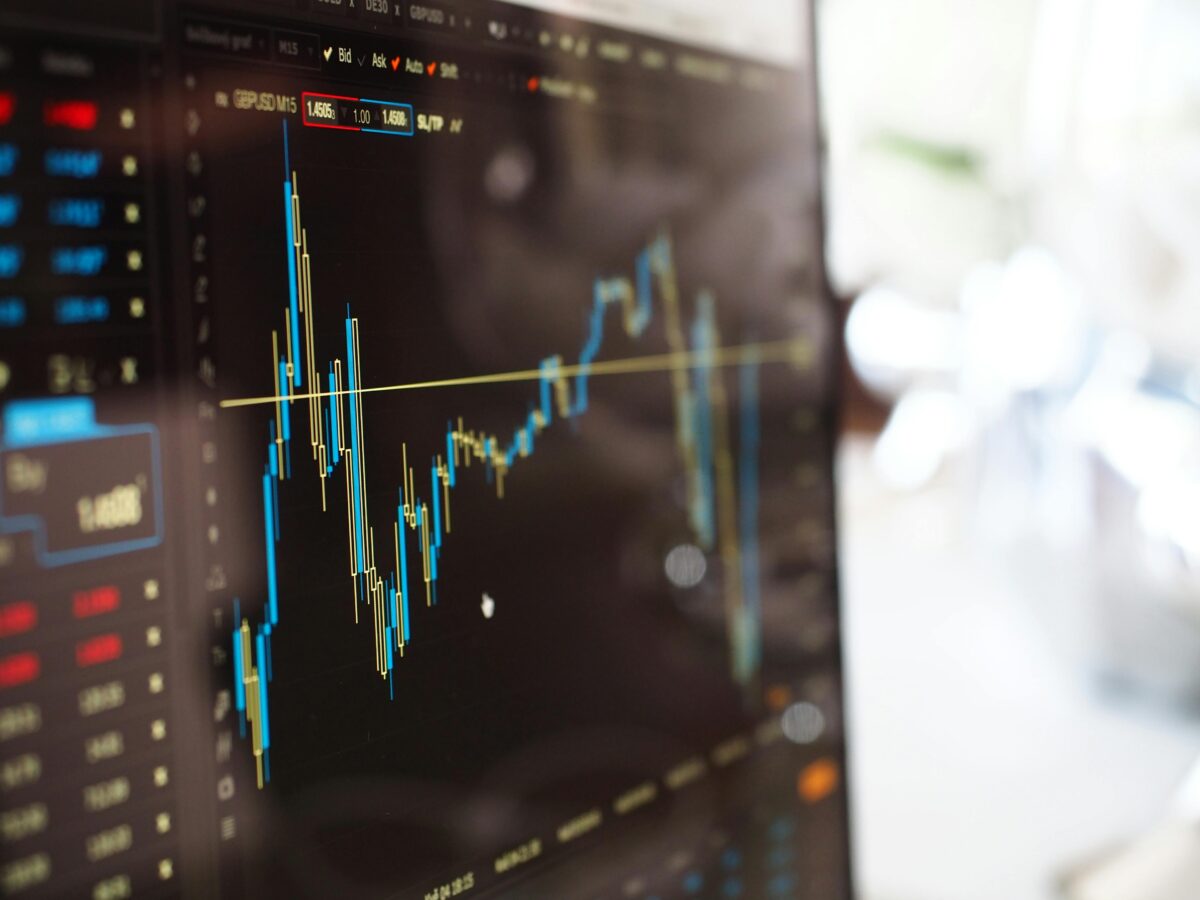
Crypto exchanges are often viewed simply as platforms for buying and selling digital assets. In reality, they play a far more influential role. Exchanges shape liquidity, price discovery, trader behavior, and even which assets gain relevance. Understanding the crypto market without understanding exchanges means overlooking the environment in which most activity actually occurs.
Unlike traditional financial markets, the crypto market developed with exchanges at its center. There was no long-established institutional layer before retail participation. As a result, exchanges became not only trading venues, but also gatekeepers of liquidity, access, and visibility. Listing decisions, trading incentives, and market structure directly influence how assets behave.
One of the defining characteristics of the crypto market is fragmentation. The same asset may trade on multiple exchanges at different prices, with varying liquidity and depth. Arbitrage helps reduce these differences, but it does not eliminate them entirely. This fragmentation makes the crypto market more dynamic, but also more sensitive to liquidity shifts and technical disruptions.
Liquidity itself is unevenly distributed. Major assets benefit from deep order books and continuous activity, while smaller assets often rely on concentrated interest and incentives. When sentiment changes, liquidity can evaporate quickly. Exchanges amplify this effect through fee structures, leverage offerings, and promotional activity that attracts short-term participation.
A useful comparison can be made between centralized and decentralized exchanges. Centralized platforms prioritize speed, user experience, and deep liquidity. Decentralized exchanges prioritize transparency and permissionless access. Each model introduces different risks and trade-offs. Centralized exchanges concentrate operational risk, while decentralized exchanges expose users to technical and liquidity risks.
Market behavior on crypto exchanges is also shaped by leverage. Margin and derivatives markets increase capital efficiency, but they also magnify volatility. Liquidations triggered on leveraged positions can accelerate price movements, creating feedback loops that would be less pronounced in spot-only markets. These dynamics explain why crypto markets can move sharply without obvious external triggers.
|
Aspect |
Centralized Exchanges |
Decentralized Exchanges |
|---|---|---|
|
Custody |
Platform-managed |
User-controlled |
|
Liquidity |
Generally deeper |
Fragmented |
|
Execution speed |
High |
Variable |
|
Transparency |
Limited |
On-chain |
|
Risk type |
Operational |
Technical and liquidity |
|
User responsibility |
Lower |
Higher |
Another often overlooked factor is exchange-driven behavior. Fee discounts, trading competitions, and incentive programs encourage activity, sometimes at the expense of long-term stability. Traders responding to these signals may increase turnover and risk exposure without a corresponding improvement in strategy quality.
Price discovery in crypto markets is therefore not purely organic. It emerges from the interaction between trader behavior, exchange mechanics, and liquidity incentives. Sudden price moves often reflect structural factors rather than fundamental changes. Recognizing this helps avoid overinterpreting short-term volatility.
Over time, more experienced market participants adapt their approach. They pay attention not only to price, but to where trading occurs, how liquidity is distributed, and how leverage is positioned. Exchanges are treated as environments with distinct characteristics, not interchangeable venues.
The crypto market continues to evolve, but exchanges remain its central infrastructure. They enable participation, but also introduce constraints and risks that shape outcomes. Traders and investors who understand exchange mechanics are better positioned to interpret market behavior and manage exposure more effectively.
Ultimately, crypto exchanges do not merely reflect the market — they help create it. Viewing them as active components rather than neutral platforms provides a clearer picture of how the crypto market actually functions.